
Creating a Legal Second Suite in a Mississauga Home
Turning an underused basement into a code-compliant, comfortable second suite while preserving the house’s structure and neighbourhood character.
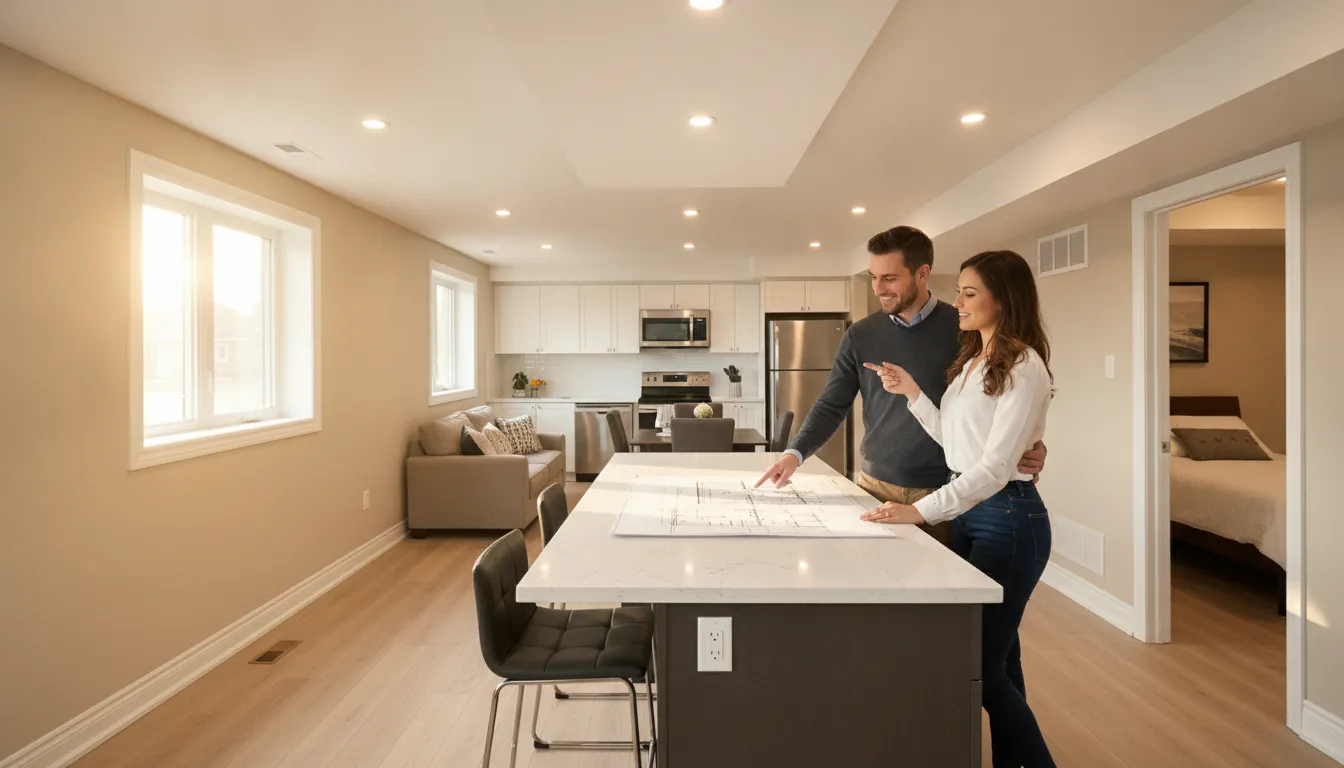
- 1
Assess and plan to code
We started with a site assessment and swept the basement for hazards, moisture sources and ceiling clearance to meet Ontario Building Code (OBC) egress and minimum ceiling height rules. Our permit drawings showed compliant escape windows, stair upgrades and smoke/CO alarm locations so the city could review and issue permits.
- 2
Waterproofing and foundation work
To protect the living space we installed an interior drainage system tied into the existing sump pump, applied a parging-layer and then a vapour-control membrane. For the block walls we used closed-cell spray foam in strategic areas and rigid XPS board where we needed continuous insulation to manage thermal bridging and protect against moisture.
- 3
Framing, insulation and fire separation
We framed 2x4 partition walls with resilient channel where sound control mattered, and installed 5/8" Type X gypsum for the required one-hour fire separation between units. The exterior-facing walls received mineral wool for sound and fire performance while the underside of the main floor was fitted with batt insulation where allowed by code.
- 4
Mechanical, electrical and plumbing separation
We added a dedicated electrical panel and meter-ready connection labeled for the suite, installed a compact HRV (heat recovery ventilator) sized for the suite to meet ventilation requirements, and routed a new hot-water loop and separate drain-lines for the suite’s bathroom and kitchen. All work followed electrical and plumbing code practices and was inspected during construction.
- 5
Finishes and final inspections
We used durable finishes suitable for rental life: vinyl plank flooring, semi-gloss paint on washable walls, and an acrylic-clad shower with ceramic tile floor. Final steps included installing interconnected smoke and CO alarms, providing owner documentation and booking city inspections for occupancy certification.
Frequently Asked Questions
How long does a legal basement suite conversion usually take?
Typical timelines for a project of this scope range from several weeks to a few months depending on permits, inspections and any required foundation work. Weather in Mississauga (especially winter) can affect exterior work, so we build seasonal buffers into schedules.
Will homeowners be able to stay in the house during construction?
In most cases yes — we sequence noisy or disruptive trades to limit impact and keep shared services active until the new mechanical connections are ready. We keep homeowners informed by email with progress updates and inspection scheduling.
When is a basement required to be converted to a legal suite?
If you plan to rent a space long-term or list it separately, municipal rules typically require a legal suite with proper egress, ventilation and separation. Each municipality in Peel Region, including Mississauga and nearby Brampton and Oakville, has specific rules, so we design to meet local OBC and city bylaws.
How do you handle moisture and basement water issues?
We address moisture with a layered approach: fix exterior grading where possible, install an interior drainage/sump system, apply vapour-control membranes and use appropriate insulation like XPS and closed-cell spray foam. That combination keeps the living area dry and protects finishes and mechanicals.
Thinking about a legal second suite in Mississauga?
We’re a family-run team serving Mississauga, Peel County and neighbouring communities. Email us for a thoughtful plan that respects your home and your neighbours.
Get a Free Quote